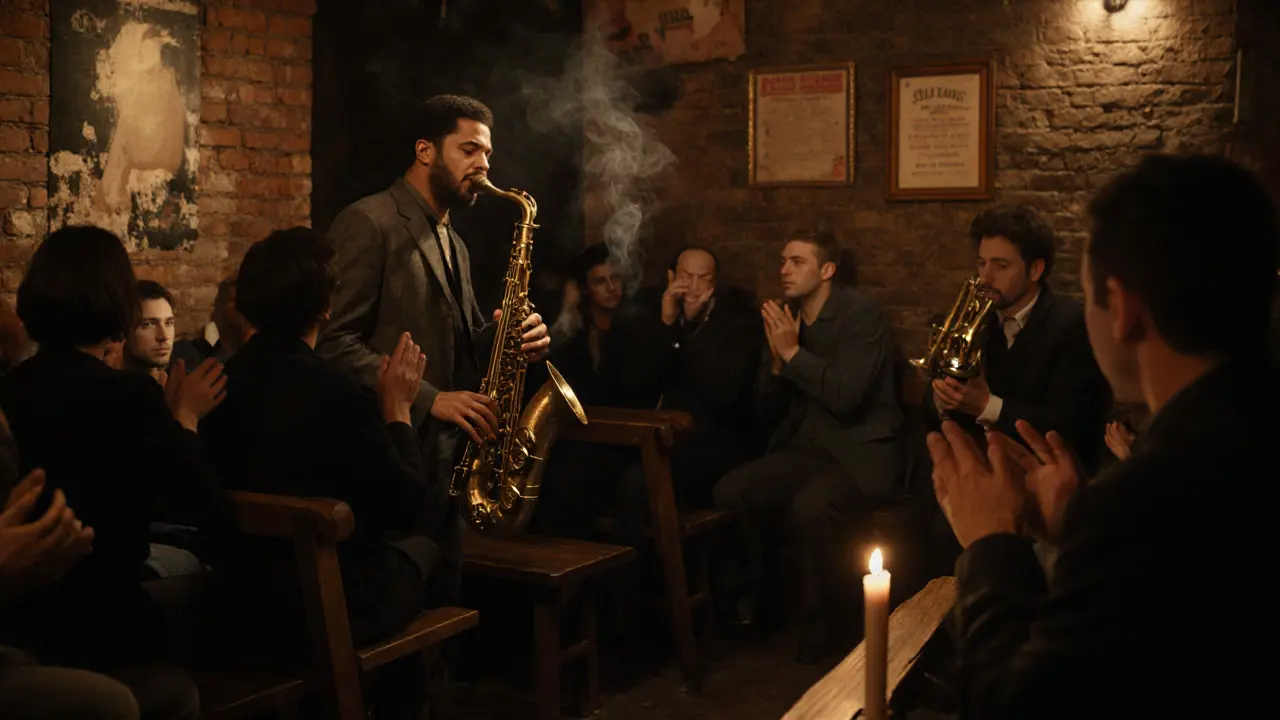
Paris doesn’t just sleep when the sun goes down. By 10 p.m., the city wakes up in a different way - dim lights, smoky corners, bass thumping through brick walls, and the sound of a trumpet cutting through silence like it owns the room. This isn’t just about drinking or dancing. It’s about finding the right room, the right vibe, the right moment. Whether you want to sit elbow-to-elbow with a saxophonist in a 1920s cellar or lose yourself in a warehouse rave where the lights never come on, Paris delivers. And it’s not just jazz or electro - it’s the messy, beautiful in-between that makes the city’s nightlife unforgettable.
Where Jazz Still Breathes
Paris has been home to jazz since the 1920s, when Black American musicians fled segregation and found a home in Montmartre. Today, that legacy isn’t a museum piece - it’s alive in the same smoky rooms where Sidney Bechet once played. Jazz here isn’t background music. It’s the reason you show up.
Le Caveau de la Huchette in the 5th arrondissement is the oldest continuously operating jazz club in Paris. You won’t find a menu with artisanal cocktails here. You’ll find wooden benches, a tiny stage, and a band that plays swing, bebop, and hard bop with no setlist. People dance. They clap. They lean in when the trumpet solo hits. It’s not fancy. It’s real. Tickets cost €20, and you might end up standing for two hours because there’s no seating left. That’s part of the charm.
Then there’s New Morning in the 10th. It’s bigger, louder, and draws international names - like when Esperanza Spalding played here in 2024, selling out weeks in advance. The sound system is pristine. The crowd is younger. The vibe? Less tourist trap, more serious music lover. If you’re into modern jazz with a pulse - think Robert Glasper or Kamasi Washington - this is your spot.
The Rise of Electro and Underground Beats
Paris doesn’t just do jazz. It does techno, house, and experimental electronic music like no other European city outside Berlin. But here’s the twist: it’s not all warehouses and flashing lights. The electro scene in Paris is split between underground dens and polished venues - both equally magnetic.
La Machine du Moulin Rouge used to be a cabaret. Now it’s a techno temple. Every Friday night, DJs from Paris, Lisbon, and Tokyo spin deep, hypnotic sets in a room that feels like a cathedral made of bass. The crowd? No phones. No selfies. Just bodies moving in the dark. The sound is so loud it vibrates in your chest. You leave with your ears ringing and your soul lighter.
For something more intimate, head to Le Trabendo in the 20th. It’s not a club. It’s a converted railway station turned live music venue. They book everything from glitchy experimental electronica to lo-fi house. The lighting is low. The crowd is quiet until the beat drops. Then it’s like a switch flips. You’ll hear whispers turn into shouts. You’ll see strangers high-five after a track ends. That’s the magic of Parisian electro - it doesn’t need spectacle. It just needs the right sound.
The In-Between: Where Genres Collide
Some nights, you don’t know what you’re going to hear. That’s the point. Paris thrives on the spaces between genres. You’ll find a jazz quartet playing with a live drummer and a synthesizer in a basement near Canal Saint-Martin. You’ll walk into a bar that looks like a 1970s apartment and end up dancing to French house mixed with Afrobeat.
Le Batofar, a floating venue on the Seine, is the best example. It’s a barge turned club, anchored near the Olympic Village. The lineup changes weekly: one night it’s a French rapper with a live jazz band, the next it’s a DJ from Senegal blending kuduro with ambient synths. The crowd is young, diverse, and unpretentious. You’ll see people in suits next to people in ripped jeans. No one cares. They’re here for the music.
Then there’s Café de la Danse in the 18th. It’s a tiny place with a sticky floor and a sound system that could shake concrete. They host “Jazz & Bass” nights - where live percussion meets looped beats. It’s not pure jazz. It’s not pure electro. It’s something else. And that’s why people come back.

Where to Eat Before You Dance
Paris nightlife isn’t just about the music. It’s about the rhythm of the night. And that starts with food. You don’t show up at 1 a.m. hungry. You eat early, then move.
Le Comptoir du Relais in Saint-Germain is a classic. Order the duck confit, a glass of natural wine, and sit at the counter. The chef nods at you like you’re family. You’ll leave at 9:30 p.m., full and calm, ready for the night ahead.
For something cheaper and louder, head to L’Avant Comptoir. It’s a standing-only wine bar with charcuterie, tiny plates, and a crowd that’s already buzzing by 8 p.m. It’s the perfect pre-game. You grab a glass of Beaujolais, eat a bite of pâté, and listen to the chatter. By 10, you’re walking out, already thinking about the next stop.
How to Navigate the Scene Without Getting Lost
Paris isn’t a city where you just wander and find a club. You need a plan - but not a rigid one.
- Check Paris Jazz Club or Resident Advisor for weekly lineups. Both update every Monday.
- Arrive early. The best spots fill up fast. Even if it’s 10 p.m., you might wait 30 minutes to get in.
- Don’t rely on Uber. Many clubs are in areas with no pickup zones. Use the metro. Lines 12 and 13 run late on weekends.
- Carry cash. Many small venues don’t take cards. A €20 bill covers entry, a drink, and maybe a snack.
- Be respectful. Parisians don’t shout. They listen. Even in a club, silence between songs is sacred.
And here’s the secret: don’t try to do it all. Pick one jazz club. One electro spot. One in-between place. That’s enough. You’ll remember those nights more than if you rushed through ten.

Seasons Change the Vibe
Paris nightlife shifts with the weather. In summer, the Seine banks turn into open-air dance floors. The Festival de Jazz à La Villette in July draws 100,000 people. Outdoor stages, food trucks, and midnight sets under the stars.
Winter is quieter, but deeper. Clubs stay open later. The crowds are smaller. The music is warmer. You’ll find more soulful sets - less hype, more heart. It’s the best time to discover hidden spots. Locals know this. Tourists don’t.
Spring and fall? That’s when the city feels most alive. The air is cool. The lights are bright. The music feels urgent, like it’s saying something you need to hear.
What You’ll Leave With
You won’t leave Paris with a list of clubs you visited. You’ll leave with a feeling. The way a saxophone note hangs in the air after the last chord. The way the bass makes your teeth vibrate in a dark room. The way a stranger smiles at you because you both knew that song was coming.
Paris doesn’t sell nightlife. It offers it. And if you listen - really listen - you’ll hear why it’s still one of the best places on earth to be after dark.
What’s the best time to go out in Paris for nightlife?
Most clubs don’t get busy until 11 p.m. or midnight. Jazz venues start around 9:30 p.m. with live sets. Electro spots hit their stride after 1 a.m. The real magic happens between 1 a.m. and 4 a.m., when the crowd thins and the music gets deeper. Don’t rush - the best nights start late.
Are Paris nightclubs safe for solo travelers?
Yes, especially in central areas like Le Marais, Saint-Germain, and the 10th arrondissement. Parisian clubs are generally well-lit, staffed, and respectful. Avoid isolated streets after 3 a.m. Stick to well-known venues. Most locals will help if you look lost. Don’t be afraid to ask for directions - people are usually happy to point you to the next club.
Do I need to dress up for Paris nightlife?
No. Parisians value style over flash. A nice pair of jeans, a clean shirt, and good shoes work everywhere. Avoid sportswear, flip-flops, or overly casual outfits - they’ll stand out. At jazz clubs, even a blazer is enough. At electro venues, black is the uniform. The goal isn’t to look rich - it’s to look like you belong.
Can I find English-speaking staff in Paris clubs?
In tourist-heavy spots like Le Caveau or La Machine, yes. In smaller, underground venues, staff might speak little English - but they’ll still help you. Most bouncers and bartenders know the music scene inside out. A smile and a simple “Merci” go a long way. Don’t expect service like in New York or London - expect warmth, not efficiency.
Is Paris nightlife expensive?
It can be, but it doesn’t have to be. Entry to jazz clubs is usually €15-25. Electro clubs charge €10-20. Drinks cost €8-12. Many places have early bird specials - like €10 entry before 11 p.m. Skip the champagne. Stick to wine, beer, or a simple cocktail. You’ll save money and still have a better time.